
Why AI Sales Coaching FeedbackDoesn't Guarantee Change
October 26, 2026
Last October, I was on a call with a leader who was evaluating training for her team. And I said the thing I always say.
You will be amazed at how ineffective people are at asking questions.
Then I stopped, because I could see her reaction. So I told her I could see it, and that it's true.
She didn't argue. She didn't agree either. I kept going.
I get that reaction almost every time I say that sentence out loud.
Nobody hears that sentence and thinks it's about their own team.
Why Can Experienced Reps Miss Important Discovery Questions?
Experienced reps can mistake familiar customer language for a familiar customer problem. Prior success makes an interpretation feel credible, but the current buyer may mean something different. Effective discovery requires checking the meaning in the present conversation rather than treating experience as confirmation of the answer.
Microsoft’s September 2026 account of its own AI transformation says tools and training alone are insufficient. The company describes managers supporting experimentation and learning as part of the work.
Right about here is where most leaders decide this is a junior rep problem. Newer people, not enough time in the seat, and they'll grow out of it.
They won't. And it isn't the newer people. A lot of times it's worst at the top of your team.
The more experienced we are selling what we're selling, the more likely we are to hear a customer say something and think, "I've heard this before. I know what that means."
So we stop asking. Not out of laziness. Out of experience, which feels a lot like knowing, right?
Curiosity is a skill we're born with. And it wanes over time, for a lot of reasons. Getting good at your job is one of them.
Why Does Recognizing a Skill Gap Matter for Behavior Change?
Recognizing a skill gap gives a rep a concrete reason to examine an established habit. In Ira's experience, knowing what information to obtain and asking a question that produces it are different abilities. Training becomes personally relevant when the rep can see that difference in their own work.
I went through Selling Through Curiosity (The skills-based program that I teach) twice as a quota-carrying rep, years before I ever facilitated it.
Both times, I found out I wasn't as good at this as I thought. I knew what I wanted a customer to tell me. What I actually asked them wasn't going to get it.
It's not the end of the world. But it's not comfortable either, and it's the part that has to happen. Part of behavior change is accepting that we may not be as good at this as we thought.
Nobody accepts that from a slide.
Why Isn't Confidence Proof of Effective Discovery?
Confidence in discovery does not establish that a rep's questions produce the information the customer needs to explain. A rep can have sensible reasons for a habit that still deserves testing. Revenue results alone cannot isolate question quality because many other factors affect whether a deal closes.
Most people in sales believe that they're doing effective discovery. Ask a rep, and they'll tell you. Ask their manager, and you'll get the same answer.
And they're not bluffing. Ask any of them why they work the way they work, and the answer holds together. There are reasons behind it, and they're usually decent ones.
But what your reps believe works and what actually works are two different things. And they'll defend what they believe until someone tests it.
Most of the time, nobody does. They've been selling this way for years. Their number moves up and down for a hundred reasons. So nothing in the results ever points back at the questions.
What does your team believe about discovery that nobody has ever checked?
What Can Conversation Intelligence Add to Sales Coaching?
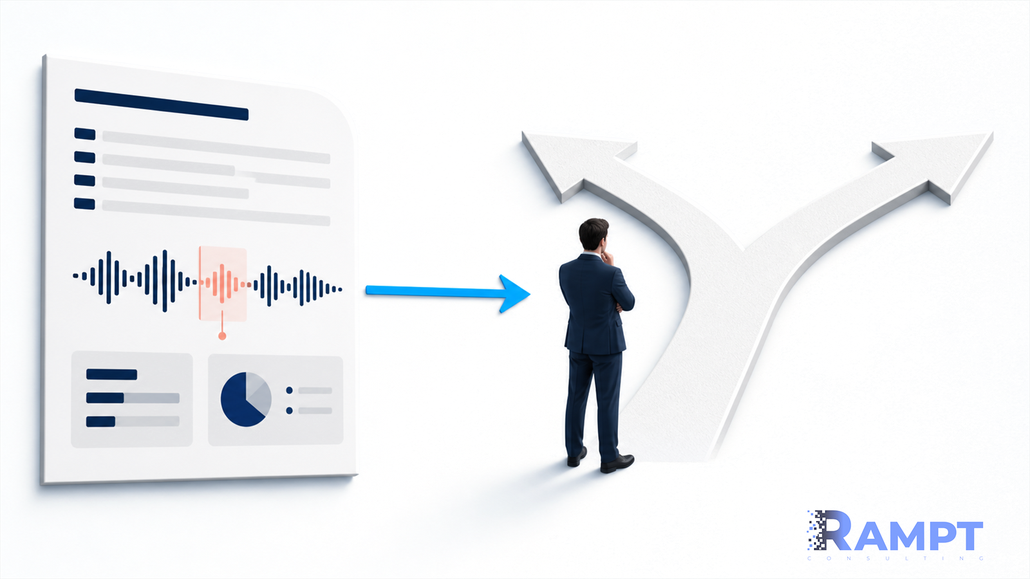
Conversation intelligence can help managers find specific moments worth reviewing, including a change of subject or an answer left unexplored. The evidence creates a starting point for coaching. Agreement with an AI report does not establish that the rep will respond differently in the next customer conversation.
Microsoft Research’s 2026 guide to better thinking with AI focuses on using AI to improve thinking. A coaching report becomes useful when it helps the rep examine a specific judgment in a real conversation.
Here's where the technology earns its place.
Conversation intelligence is good at this now. It'll pull the moment your rep changed the subject. It'll show you the question nobody asked, sitting next to the answer that would have mattered. That used to take a manager sitting through a full forty-minute call. Most of the time that didn't happen.
So the evidence got cheap. I would argue it's the most useful thing these tools do.
But does seeing the gap make anybody care?
A rep can read that report, agree with it all, and change nothing on the next call. They have to recognize the gap themselves. And I mean recognize it in a conversation, with a customer, with something on the line. If they don't, they won't change.
You can't hand recognition to someone in a document. I've watched a lot of people try.
How Can Managers Help Reps Recognize Their Own Discovery Gaps?
Managers can invite reps to review a call and explain what they would do differently before presenting feedback. If the rep misses a relevant moment, replaying the customer's words gives both people specific evidence to examine. The conversation should build understanding of the customer rather than simple agreement with a report.
So here's what I'd do with those tools, and it's not what most teams do with them.
Don't send your rep the report. Sit down with them, pull up the call, and ask what they'd do differently. Make them go first.
Oftentimes they'll find it themselves. And that version is the only one that sticks.
If they don't, don't tell them. Take them to the spot, play it back, and ask what they think the customer meant right there. Not what they should have said. What the customer meant.
Now they get to see, hear, and experience it themselves. That's the light bulb moment.
Why Do Discovery Skills Matter More With Informed Buyers?
When buyers arrive with substantial product research, a rep needs to contribute beyond repeating available information. Discovery helps connect general knowledge to the customer's circumstances, constraints, and intended outcome. The value of the meeting depends partly on whether the conversation reveals something the prior research could not establish.
TrustRadius’s 2026 buyer research documents AI use during purchase research. That makes it worth asking what your rep adds after the customer has already done that work.
You have less customer-facing time than you used to.
Your buyer already read your site. They ran your whole category through a model before the call and showed up knowing most of what your rep was going to say.
So what does a rep who's a little worse at questions than they think cost you now?
It used to be a longer cycle.
Now it's the meeting. Potentially the deal.
Ira Bernstein is the founder of Rampt Consulting and master facilitator of the Selling Through Curiosity sales methodology.

The Next STC Live Virtual is coming up fast The next quarterly cohort is forming now. Book a short call and we’ll confirm fit, walk through the schedule, and answer any questions about enrolling your team.